Monday, 24 November 2014

LT Ducks

With the weather mixed this weeks opportunities to get out have been limited. Midweek managed to get to Geosetter hoping to find the Red Flanked Bluetail but no luck again as it appeared to have left the area. Only Goldcrest (3), Robin (1), Blackbird (11) Field fare (24) Twite (16) Curlew (38) could be found before the light started to fade. In Shetland the light goes quickly and at  present is really no good for photography after 2.30 pm, unless the sun is directly on the area.

During the rest of the week lots of Fieldfare ad Redwing showed , while the ever present Fulmars glided past the car. A Robin continues to visit our garden and it was good to see a flock of nearly 100 Fieldfare landed in the field opposite our house. Curlews are also visiting the field with the odd Redshank especially early in the morning but are soon driven off by the Herring Gulls.

Although Saturday was wet and very windy, Sunday proved far better with still sunny weather all day. A Black Redstart was a nice find at the end of the garden  and on our way a Peregrine flew past chasing a Rock Dove.

Down in the south mainland it was quiet, not on the bird front but the lack of people. Only one plane at Sumburgh and two beaches to ourselves. Lots of Turnstone present , at Grutness (16), West Voe of Sumburgh ( 28) with Purple sandpiper (6) at the latter site. The waders finding food among the mass of seaweed that had been washed up. A few Rock Dove acted like flycatchers, darting after small flies. A Large flock of Starling were busy feeding only just jumping out of the way of waves crashing on the beach. One lone Snow Bunting was again found around the same spot as last time , spending most of its time just on the edge of the dunes.

A Red Throated Diver came into Grutness bay, a late one as it is the first i have seen in over a month most moving south, but this one must have been tempted to stay by the mild weather. Even in winter plumage they look smart birds.


One bird that is always an attraction is the Long Tailed Duck and more have appeared at numerous sites in the past few weeks. At Grutness 5 males, West Voe 4 males and 1 female and in Quendale bay 12 again including 10 males. In Lerwick the other day 6 Long Tailed Ducks could be seen close to the Mareel. A small party of Red Breasted Mergansers came close in at West Voe.


Wednesday, 19 November 2014

Shetland Adult Education classes available

I will be running the following Adult education classes in Lerwick (9.30- 12.30) and Sandwick School (1.45- 4.45).    

Introduction to Nature - starts 19 January for 6 weeks, course code (AL115 Lerwick only).          

Digital Photography for Beginners starts 2 March for 6 weeks, Course codes (AL116 Lerwick, AL119 Sandwick)                  

Intermediate Digital Photography starts 27 April for 6 weeks, course codes (AL117 Lerwick and AL120 Sandwick) .        

Places are limited so please book early, phone Shetland Adult Education on 01595 743888      


Tuesday, 11 November 2014

Cheeky

After the recent strong gales we hoped that something unusual would turn up and although we didn't find any rare birds a Grey Cheeked Thrush turned up in the afternoon at Rerwick, Red Flanked Bluetail's at Geosetter and Voe and a Grey Phalarope and Pied Wheatear in Unst.

Saturday was superb weather and after a few days in we couldn't wait to get out. Heading down to the South Mainland we thought that large numbers off thrush may have arrived in the strong easterly winds but few could be found.

At West Voe of Sumburgh the waves crashed high up the shore where a large amount of seaweed was present, this attracted Purple Sandpiper (7) Turnstone (56) Redshank (16) and numerous starling. Further along the two Snow Bunting were still present but now into the dunes where they would disappear frequently.


On the sea four Long Tailed Duck showed, two very close in which provided good photo opportunities. A  large raft of Fulmar made up the bulk of the other birds along with several Shag and a few Herring Gulls.


Onto Spiggie where Whooper swan(16) became very vocal but remained on the loch, these were joined by Mute Swan(2) and Goldeneye (18) staying very close to the swans. Wigeon (35) Teal 6) Mallard (12) Slavonian and Little Grebe (1 each) stayed close to the shoreline. Flocks of Lapwing, Curlew and Greylag kept flying up, maybe due to a bird of prey but we didn't see one.

On the beach a flock of Turnstone (28) took flight but Common Seal (12) came up close to pose for photos. Many Fulmar skimmed across the bay and several Gannet plunged into the sea, while Ravens and Hoddies kept flying down to feed near Sheep.

On Sunday we caught up with the Grey Cheeked thrush which was very confiding, although the sun was bang in front of us. Later we moved round so the sun was at our backs and managed better photos. Only three of us watching this North American bird, breeding in Alaska and Canada and which usually winters in central and south America. A far cry from when the Rubythroat or Yellow Browed warbler was found attracting scores of twitchers.


Wednesday, 5 November 2014

Another new bird

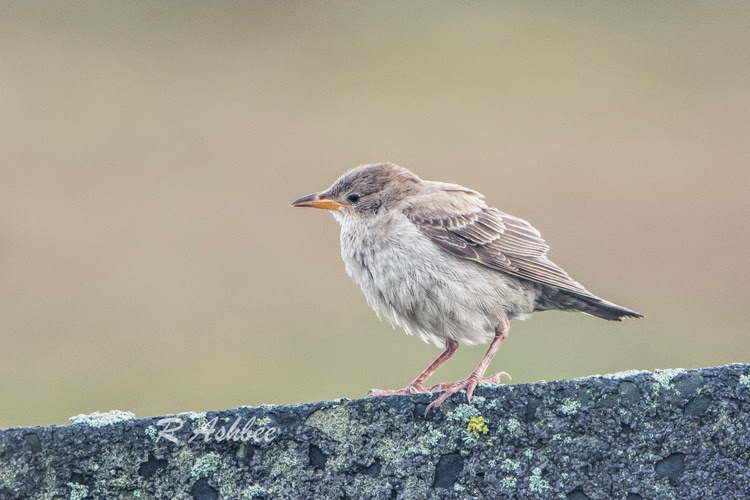
With the weather starting off dry and sunny on Monday we headed north to Voe in the hope we would see the Rose Coloured Starling that has been present for around 16 consecutive days. Arriving at the location we could see a number of common starlings visiting the fat balls along with sparrows.


After a wait of about 1/2 hour the RC starling appeared on one of the out houses. It didn't stay long before flying off, during the wait for it to reappear a  Brambling started to come to the feeders and a Sparrow with a partial white forehead head.


The Rose coloured Staling was my 14th  new bird since moving to Shetland in April.


Again the RC Starling re appeared again on the shed at the far side of the garden but it didn't make any attempt to come down to the feeder, where several people had managed good photos. It flew off again and after an hour we gave up and moved to our next location at Kirkabister.


Passing along Vidlin Voe the light was superb, with the sunlight hitting Lunna on the opposite shore. After passing several houses we parked up and set off up the hill on foot. Conditions were very wet underfoot but apart from sheep and a flock of Greylag little else was seen. Further up the hill a couple of snipe flew up and this drew my attention to three birds down on the Voe which  turned out to be two Gt Northern divers and a Slavonian Grebe, now in winter plumage.

A lock at the top held three wigeon, then a flock of 150 Golden Plover flew over. Thrushes started to appear on the hill, mostly Fieldfare mixed in with a few Redwing. Back down around the cottages Blackbird, Starling and Robin (4) could all be seen on pasture rather than in the bushes.The starlings always ready to jump up to ride on a sheep and to gain a better views.


The weather changed to cold wet and windy day for our next trip to Geosetter. The previous day a Red Flanked Bluetail had been caught and ringed and provided good views but when we went the following day it was not present. We did see Goldcrest (2) Robin, Twite (4) Blackbird (11) Redwing (6) Raven Hoodie and a couple of fly past snipe.

If you want to see landscape photos of the Kirkabister area please visit my blog at:
shetlanddream.blogspot.co.uk  - at the weekend

Sunday, 26 October 2014

making a difference.

Before we came to Shetland I had taken part in many different wildlife surveys and as soon as we settled in I signed up for a number of surveys here. Making any contribution to the understanding of wildlife in any region is very beneficial, you never know what is going to impact on a site or species and the only way to safeguard is to collect information for as long as possible by as many people as possible. Already threats have come in from the proposed wind farm in the central mainland, Yell and no doubt many others sites and conversations on the impacts continue.
                                                                                     Siskin, on the up, have you noticed this ?

Objections can be made if you know whats happening but like most areas in the UK things happen on the quiet and then its too late. In this weeks Shetland Times the newspaper highlighted the fact that an area of marshland in Unst is being drained in an attempt to prevent flooding. The area in Haroldswick which has attracted many species had been designated a local nature reserve, one of 31 in Shetland.
This unfortunately offers no protection and work had already been done with an excavator which had dug trenches several feet wide without  prior consultation.
                                                                          Eider Duck why are they declining in Shetland ?

These areas are important areas of bio- diversity as habitats for a range of species including either national or local rarities. The council has a list of the local nature reserves so why no consultation ? This area is well known and records have been taken into consideration when designating it a local nature reserve but many areas in Shetland are equally important and records from individuals can make a difference, so please submit records to relevant wildlife groups where ever you are.!!!!
                                                                       Gt Northern Diver, how many winter in Shetland ?

When oil birds are found, analysis of the type of oil is collected and can be traced to a certain oil field location, or types of oils. Its not just seabirds that are found, other birds have included Whooper Swan, Long Eared Owl  and even a Night Heron to name a few.

For the past five months i have been surveying the beach at Sandsayre, Only a Fulmar has been found so far and this was back in June. The survey takes place the last weekend of the month throughout the year. I will discuss the other surveys I undertake later this year.
                                                                                            Sandsayre beach

An easy one for everyone to make a contribution is to send in bird records , not just rare birds but common ones too.
Blackbirds do you know what you local population is ?

Black Guillemot
                                                                        Song Thrush, a large influx in Shetland this autumn

Monday, 20 October 2014

Unst & more

It was good to get back up to Unst recently, the weather was good and both crossings produced Long Tailed Ducks. A flock flew along side the ferry going across to Unst with  a larger flock of 38 birds including some superb males just behind the first party. Gannets plunged into the sea and one gannet in particular got attacked by two Gt Skuas and was forced to crash land into the sea.

Whooper swans and a couple of Goldeneye was found at Uyeasound and on the way up to Baltasound many Greylag could be seen feeding beside the roadside. We did not see the Rustic Bunting or any other birders at Uyeasound so it must have moved on.

Coming into Baltasound a flock of Teal flew in and landed close to the shop. Also 33 Rock Dove fed along the shoreline, while  12 Red Breasted Merganser came into the bay. Turnstone, Redshank, Ringed Plover, Snipe and Curlew could also be seen here.

We Moved onto the gardens hoping to find Bluethroat and Little bunting which had been present for sometime. To start with a flock of 12 Brambling flew in a perched in a nearby tree, they appeared very nervous and kept flying off. A couple of male Blackcap joined two other female Blackcap's on a lawn, while a couple of Chaffinch kept appearing in and out of a hedge.


I followed the track up to Halligarth plantation, passing deserted buildings, one from WW2 which had held the Bluethroat earlier in the morning. No sign now but in the next garden a Siberian Chiff chaff put on a good show.


On past a house where a Reed Bunting showed well and then into the garden at Halligarth, one of the few woods in Shetland. On the edge of the wood a Yellow Browed Warbler fluttered through the branches then disappeared over the old house, then a female Blackcap and another Siberian Chiff chaff showed. A Redwing appeared on the wires then it came down to the edge of the wood but little else could be found, only a couple of Robin and three blackbirds inside the wood.

A walk down to the coast only produced Twite (18) Lapwing (22) Greylag (54), Pinkfoot (1) Red Breasted Merganser (2) Raven and Hoddie. I started walking back to the car stopping at the last garden for a look when first a Goldcrest, then a Common Chiff Chaff and another Blackcap showed. Then the best, twenty yards from the car a Bluethroat appeared dropping down out of a hedge, it stayed a few moments before flying up into the garden, what a superb bird.

The day after with the weather still excellent, we headed for Sumburgh and the lighthouse. Again no one around but a few birds showed The Snow bunting was allowing a close approach as did the Brambling's although fewer than a few days ago. A Redwing fed on the rose hips as did a few Blackbirds and one song Thrush.


 At Hillswick four Fieldfare fed beside the roadside, winter is on its way. Making my way over to the beach I flushed a flock of 16 Snipe, 36 Lapwing and many Starling. On The beach Ringed Plover (8) and Turnstone (16) fed near a stream that ran into the sea. On the way back a couple of Grey Heron at Urrafirth and Voe stood motionless beside the sea.

Today started wet and breezy but we traveled down to the south mainland where two House Martin flew over the airport. At Grutness, a Goldcrest and a male Chaffinch showed well in the garden. On the beach a Knot, Sanderling (22) Turnstone (26) Redshank (6) and Wheatear (4) fed amongst the seaweed.

A flock of Long Tailed Duck (9) including 4 superb males flew into the bay just as it started raining heavy, pity as it was a good photo opportunity.

Not much at Sumburgh Head except a flock of Twite (18) Redwing (4) Blackbird (10) while 129 Shag stood on the rocks below the cliff.

The remains of the Hurricane should hit Shetland later today with winds of 70 mph expected so it should blow a flew birds in.