Although the main season for migration in Shetland is over for the season, its still happening with several more Siberian Chiffchaff, including one in the garden. There has been a good number of Jack Snipe, Common Crossbill and various Redpoll
Rarer birds including a Raddes warbler at Clickimin, Little Bunting Fetlar, White Billed Diver at Nesting, American Golden Plover in Unst and a Black Bellied dipper at Walls.
Autumn migration is much slower than Spring, all breeding is finished and many birds need to feed up for a long migration.
The Siberian Chiffchaff, see last blog, appears to be ringed somewhere outside Shetland, pity photos didn't give more information. Experts also think it is a `flavescens' race, which is used to describe the birds are intermediate between tristis and abientinus
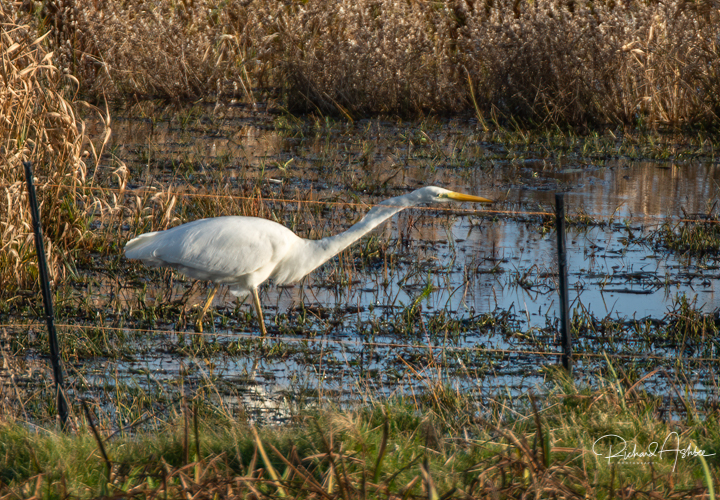
A few birds have stayed a long time, a Kingfisher at Voe,(May have been the one on Skerries (3 October) Blackpoll warbler at East Burra firth (Since 16 October) and a Great White Egret since the 12 October at Spiggie,
The GWE has now moved more or less permanently to the NW side of Spiggie making it easier to see.
It seems to be well settled and feeding well. At 3.5 feet high they can easily be seen and to avoid confusion with the smaller Little Egret which has yellow feet and black feet, the GWE has the opposite, a long yellow beak and black feet
The UK's first breeding record was down at the Summerset Levels back in 2012
Also just a bit further out in the loch 5 Scaup fed. A total of 88 swans both Whooper and a few Mute swans, at least 55 Goldeneye, 120 Wigeon, 1 Shoveler (m), Teal (50+) Mallard (30+) Moorhen, Coot and Slavonian Grebe(1), Graylag (150)
A few 100 Fieldfare and Redwing down in the NE corner but little else except flocks of Curlew flying over with numerous Skylark and Meadow Pipit.