Friday, 14 August 2015

Breeding Red Backed Shrikes

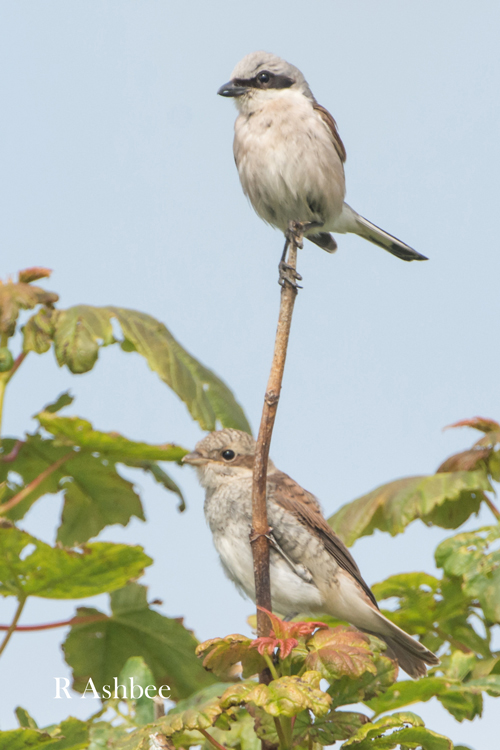
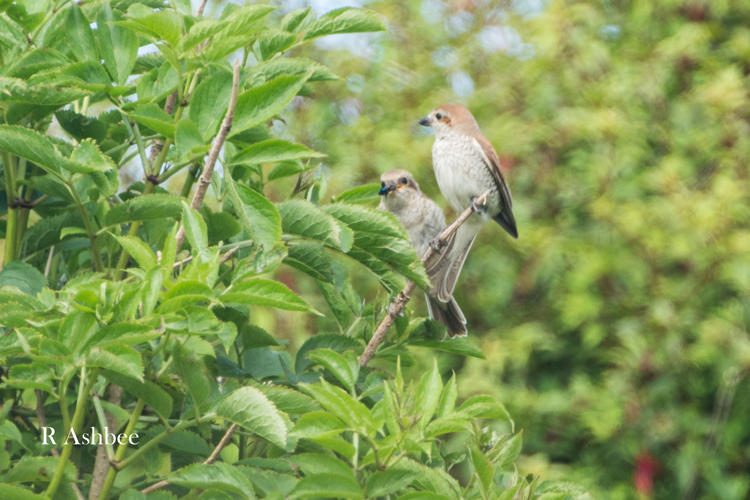
The news is out that a pair of Red backed Shrikes have bred this year in Shetland. Quiet a few birds came into Shetland during the spring period and it looks like a male and female decided to stay on and breed.

 I took these photos of  the pair feeding well fledged birds some weeks ago but due to the sensitive nature , I withheld these until now . Articles have appeared in the Shetland Times on BBC Scotland, and numerous other publications so I think its safe enough to release these without giving a location.


I did not approach the birds closely and kept to a public area. I first noticed a male perched in a bush and then investigating came across the family. The info and photos have been sent to the Shetland Bird club, who all ready knew about the  breeding pair. It is policy not to publish any information on rare breeding birds and leave it until they the young have flown


 Already this year problems have occurred with other rare Shetland breeding birds when either over enthusiastic photographers or egg collectors have been involved.


That's why I would never consider using a hide, you are just drawing attention to a nest no matter how camouflaged they are. I also consider that it may be consider a thrilling experience to photograph birds at the nest but the challenge of photographing birds `doing there thing ' - feeding, flying etc are far more rewarding and don't put the birds in danger, not just from humans but predators.


 Red Backed Shrikes can be found throughout Europe, but within the UK they have declined to such an extent that it is classed as a Red Listed Bird. Since the last breeding pair in 1992 (East Anglia) a pair has bred down in Dartmoor in 2010 & 2013 and could have bred last year but no information is recorded.

Therefore this breeding pair which raised 4 young is a very significant record. This is thought to be only pair of Red Backed Shrikes breeding this year in the UK. Prior to this I saw a pair in Unst a couple of years ago but no record of breeding came out. In Shetland you get a number of birds that only breed very occasionally


These are really beautiful birds and to come across a breeding pair with large young is great news for Shetland , usually we only see them on migration.

Waders

Waders are now returning in good number and local birds are starting to flock together. The last couple of days i have visited Grutness, Virkie and Scatness and all produced a good variety of wader.

A Little stint was the first bird seen at Grutness but flew off before I could get my camera ready. Young Dunlin could be seen beside the freshwater pool along with Redshank and Oystercatcher.


Down on the beach only 6 Sanderling scurried along the beach, now cleared of seaweed.

At Virkie the tide was out leaving a large amount of mud, this tidal bay is excellent but its a pity that the sun always appears in the wrong place. Down at the western side Knot (12) fed frantically along with Dunlin. Closer to the northern shore and along a patch of seaweed a dozen Turnstone fed, very well camouflaged with their superb mottled plumage.


A large flock of Sanderling kept moving along , occasionally flying up when a car went past and these mixed in well with the Ringed Plover. Further out Three Black tailed Godwit fed close to a large flock of Redshank and a few Curlew.


A day later Scatness revealed  six Ruff on the far bank well hidden at first before a Gt Skua flew over which put these and 9 Sanderling into a loose flock flying around the loch before landing in the same place. A Grey Heron was mobbed by gulls and skuas and then was joined by a second bird , at first hidden behind a wall.

Several Swallow showed well, not a common bird here although they have appeared to have bred in a few places this year. One was still collecting mud, which seems very late


Out on the short cropped grassland 89 Oystercatcher, 2 Bar Tailed Godwit and 18 Ringed plover joined forces to form a protective perimeter. Up at the top of the hill 89 Gt Black Back Gulls inc young stood about preening unconcerned by a flock of sheep that wandered very close by.


The odd Gt Skua and Arctic Skua passed over looking for any Terns with sand eels while out in West Voe bay several Gannet and Shag searched for food. Walking along the southern bank produced over 12 Wheatear and a similar number of Rock Pipit


A flock of Rock Doves also fed down beside the loch but gave up feeding when a Gt Black Back landed close. They always seem very nervous birds


Although there has been a lot of talk about the proposed wind farm in the central mainland nobody I have talked to had any knowledge that a turbine was to be erected just to the north of Lerwick  at Luggie's Knowe. They kept this one very quiet, i wonder why ? It is now the largest one in Shetland standing at 145 m to the blade tip


This might be the way they get these up, no one will be able to do anything when they are erected- a very clever ploy.

One migrant I manged to see yesterday, was a female Sparrowhawk coming in off the sea and headed low over the power station heading west.

Sunday, 9 August 2015

Good old Albert

The report and photos coming out of Minsmere the other week of a Black Browed Albatross are quiet incredible. Bear in mind though that one had been seen across the coast in Germany so when one was found on the freshwater pool at Minsmere it was more like one of the wish list, only a handful of birders that saw the bird before it flew off never to return again.


It was back in June 1991 that we saw Albert Ross, the Shetland Black Browed Albatross which was present at Saito Hermaness between early 1970s and 1995  This bird built a nest each year hoping to attract a mate that never turned up as Albatrosses are birds of the southern hemisphere, extremely rare in these parts.


Bird watching is like that you never know what is going to turn up, as long as you are in, a so call hotspot - Shetland included then you have an excellent chance of seeing something unusual. These are normally islands or coastal locations, lucky we have both on the doorstep.


It been like summer these past weeks, except for the odd day of cloud and rain. On a great sunny, still day last weekend we travelled up to Sumburgh head . The car park was full indicating that Puffins could be seen on the cliffs.


looking over the wall near the lighthouse many Puffins stood close by, in fact hundreds stood around in groups or flying around. Some still collected nesting material, one decided to cause a fight but none could be seen carrying sandeels- a bad sign. we talked to an RSPB warden who said after a good start to the breeding season the second half was proving difficult, with few bring back eels.


                                                                                                               Fight

It seemed strange as the week before and after our visit to Sumburgh Head we watched a good number of Arctic Terns bring back large sandeels for young birds. How could these find food and the Puffins struggle?


Razorbills and Guillemots had left the cliffs a few weeks before and young birds had been seen, so these may not have been affected by the reduction of eels in the latter periods. Kittiwakes another species that relies on sandeels could be seen in very small numbers.


Curlew, Oystercatcher and Lapwing are beginning to flock in reasonable numbers, joining larger flocks of Starling. The Paddyfield Warbler is still present on Noss, but we still have not had time to visit the island even though we had two short trips to Bressay, the first island you must cross to get to Noss.

Autumn is with us now and it will only be a short time until some rarer birds start to turn up, this year though i will be more tied down with work.

Sunday, 26 July 2015

Out West

On a visit out on the west side this last weekend it was good to be out in good weather. Lots of good birds to keep the interest including some young Ringed Plover, which seem late to me.


The young are very well camouflaged blending in with the landscape and difficult to see if they are not moving around. With any gulls and skuas around they need every bit of help.


We did see an otter, not very close but it did stay around for 20 mins feeding off shore.


It was interesting to see the otter swimming past Red throated divers which didn't seem too concerned


Although migrants may have been thin on the ground, Shetland always has something to offer with some great breeding birds. A couple of interesting breeding birds this year are Grey Wagtail, linnet, Chiff Chaff and Sedge warbler.

Just recently a Paddyfield warbler has turned up on Noss and a Turtle Dove at Brae, just a foretaste of a good autumn ?

Fields and roadside verges are a mass of colour at the moment, grass cutting has started and green channels have appeared. It seems that possibly a pair of Corncrake may have bred - to be confirmed, so i hope that the cutting has not affected this.

Skylarks have only just finished singing but Curlews and Oystercatcher are still noisy, passing over our house in small flocks on a regular basis