Tuesday, 31 July 2018

Close encounter with Seabirds

Anyone starting to get interested in birds should start with a visit to a seabird colony. In Shetland we are fortunate to have several large ones, the best at Sumburgh, Noss and Hermaness but also lots of smaller ones but just as interesting

Puffins always draw a lot of attention and rightly so, they are so interesting to watch and are very colourful. It looks like they may be having a good breeding season for a change with a good number bringing in fish, mostly Sandeels

When you get close up these little birds are even more amazing, look at the stitching around the beak, only an expert could do that.

How different they are in winter when they shed the colourful beak and take on a darker, dirtier look. But then most people wouldn't be out in the north sea where they are found during the dark winter months.
I have only found one dead Puffin on the beach I survey which is good news

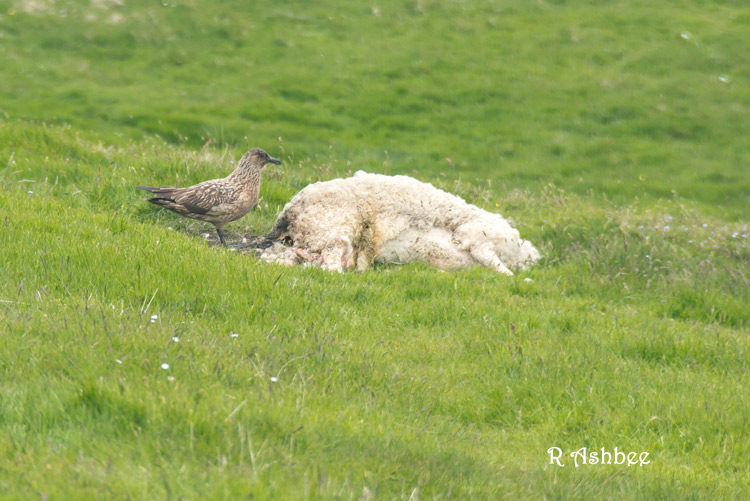
Pufflings are just about ready to fly, these come out late in the evening before they jump off the cliffs, some 600 feet high up. Parents then guide them out to sea away from predators such as Skuas


Fulmars can be found through Shetland, some on inland cliffs and even nesting on the ground on Mousa.

They hardly make a nest so it was interesting to see the above Fulmar tackling a piece of wood, surely not to use in a nest.

Please check out my other blogs

shetlandsky.blogspot.co.uk
ww2preserved.blogspot.co.uk  (about Shetland during WW2 and what can be seen now)
shetlanddream.blogspot.co.uk

Friday, 20 July 2018

Wind Farms - Protection?

How important wind has become, in the local news this week a proposed 50 turbine windfarm in  Yell , Energy Isles the firm behind the project. If you look at the directors you can see a few folk from Viking Energy, they say the usual things like we have home grown opportunity which can have a direct and positive effect on our local economy'. These will be 200m high

                                                                                                             Curlew


One new thing they are trying is now 37 companies have bought 10,000 Energy Isles shares in an effort to win some support.  

Another wind turbine which had been propose for Levenwick has scrapped plans as it failed to find funding, funding for another one at Laxo also failed to find funding on the same day.

                                                                                                           Golden Plover

Complaints were centred around the effect on the potential impact on birds, but although the RSPB had been consulted it did not object, this is not the first time they have decided not to put there weight behind an objection - you have to ask yourself what is their purpose !!!!!!!!!!!!!!!!!! Glad I left them years ago.

                                                                     Arctic Terns nesting on moorland

The propose 103 Viking Energy wind farm which will have turbines as tall as 145m,  awaits a decision in Spring 2019 as to whether they will receive subsidies to allow an interconnector to be established from the Scottish mainland to Shetland to allow the export of power.

                                                                                                     Meadow Pipit

If it gets the go ahead others will spring up in addition to the main project, a further 80+ are proposed in Yell , 17 already confirmed with Peel energy . Another 12 planned for Lerwick to Gulberwick to Scalloway with Peel energy.

Shetland will be destroyed all for a 25 year life span.

So you would think that a conservation body such as the RSPB would object.

RSPB Scotland has said it "strongly supports" wind farms, but in locations where turbines do not pose a risk to birds. 
https://www.bbc.co.uk/news/uk-scotland-highlands-islands-36367044


                                                                                                Skylark

Look at this though https://www.telegraph.co.uk/business/2016/07/19/offshore-wind-farms-in-doubt-after-rspb-gets-planning-consent-qu/

The RSPB claimed that the projects, in the firths of Forth and Tay, would together result in the deaths of "thousands of gannets, puffins, kittiwakes and other seabirds from iconic internationally protected wildlife sites like the Bass Rock and the Isle of May" each year.

                                                                                                     Skylark

Now as far as I can see Shetland is one of the most important areas for Seabirds, we should see some results soon from the current Seabird Census. In addition, Shetland is a major site for migrating birds just how many birds will be lost to wind turbines, that's not counting the cost to our breeding birds such as Red Throated Diver, Whimbrel, Arctic Tern, Skylark or Curlew, for one I don't want to see any.

                                                                                                       Skylark

From the many tourists I have spoken to none wanted to see wind farms they see too many down south and want to come to Shetland to see one of the most unspoilt landscapes in the UK


Wednesday, 11 July 2018

Breeding Birds in Shetland

Just finished analysing the figures for this years Shetland Breeding Bird survey. As before I completed two 1km squares and these are the results

Plot 1 (AOT)
                       2017        2018
Blackbird          2                2
Lapwing            2                3
Snipe                 0                1
Redshank          1                1
Curlew              2                2
Oystercatcher    1               1
Skylark              5               6/7
M'Pipit              5               5
Wheatear           2              1
Wren                 0              1


Plot 2 (AOT)

Blackbird           2             1
Curlew               1             2
Snipe                  1             0
Oystercatcher     3             5
Redshank           0             1?
Wheatear            1             2
Skylark               6             8
M'Pipit                7             5
Twite                   1            1
Hoodie                1             1

Its good to see Oystercatcher increasing while Curlew which seems to do well in Shetland compared to the rest of the UK , holding their own. Skylark numbers up on both plots with Meadow pipit slightly down.

As with all these figures you have to get a good number of years before a good comparison can be made. All this information has been passed onto The Shetland Amenity Trust which has been conducting this survey and results are normally published in the Shetland Bird Report

Thursday, 14 June 2018

Seabird decline

I was talking to a visitor to Sumburgh head a few days ago and he said the seabirds were impressive, if only he had been here about 20 years ago he would have seen a far bigger, nosier and smelly bird colony.


Shetland Seabirds have been in decline for about 25 years, numbers significantly down in Shetland but also elsewhere like the Farne Islands, St Kilda and the Outer Hebrides. So why and how do we know? Its all well saying numbers are down but without a proper census its just an educated guess.


                                                                                  Fulmars feeding on ?


This year I have joined about 40 others in Shetland undertaking the latest Seabird census to establish just what numbers of seabirds survive in Shetland. The RSPB are co-ordinating work over the next couple of seasons.
                                                                              Common Gull young

I have taken on three areas close to where I live, these are part of 550 sites to be covered in Shetland. The aim is really to count all the Arctic Terns and other seabirds in the plot for the Seabird Monitoring programme. A lot of the previous information is given so its good to compare the results


Plot 1 (1hour 1 6 18 / 1.5 hours 2 6 18

                                     1998              2018
Arctic Tern                     55                  94
Black Headed Gull          0                     2
Common Gull                  4                     5
Herring Gull                   63                    6
Shag                                 0                     3
GTBB                              3                     1
Fulmar                           399                   181

Plot 2
Arctic Tern                      2                     2
Fulmar                             310               465
Herring Gull                    9                     1
GT BB                             1                     0
Black guillemot              N/C                 6                
Shag                               N/C                  2


Plot 3 (3 hours 2 6 18)                           (2018)
Arctic Tern                                             124
Gt Skua                                                    22          (Club 46)
Arctic Skua                                               1
Puffin                                                       42
Guillemot                                                 142
Razorbill                                                    23
Black Guillemot                                        12
Shag                                                          12
Fulmar                                                      TBC

The 1998 count was part of the Seabird 2000 count (1998- 2002)


All the Auks and terns rely on Sandeels which are now in short supply, last year one Puffin from Shetland travelled for 248 miles to bring food back to the young yet a Puffin from a colony at Inner Farne only travelled a couple of miles.


This year there appears no sign of recovery with only a few birds carrying small Sandeels or very small fish

Warm seawater is said to be part of the problem with Sandeels diving deeper, but today news came in from the salmon industry in Shetland that infections on salmon are 50% down much to do with cooler waters than normal

If you are in the Sheffield area why not consider coming to my talk on Amazing Shetland, book your tickets full details on poster

No automatic alt text available.

Sunday, 10 June 2018

Shetland in spring

I went down to see the RB shrike last weekend, it was giving distant views but you could make it out. I just turned round when someone decided to climb the fence and walk round to where it had been feeding and disturbed the bird.


It flew off some distance but I relocated it only to find the same thing happened again. Looking at his car registration it would appear he was from down near London, some people are so ignorant.


Anyway, I did pick out a House Martin, Redstart and a Spotted Flycatcher and unusually 6 Collard Dove at the Quendale

I was kept amused with the House Sparrows and several Starling which had been collecting grubs, it makes you wonder how they could see.


At Virkie is was good to hear and see a Marsh Warbler, one of several in the isles, together with a Red Breasted Flycatcher and a Linnet. A Garden warbler was showy at Sumburgh Hotel, I have seen more in Shetland than I ever did in the Sheffield area.

Two Barnacle geese was a nice surprise down at Grutness and allowed a close approach, these are very late returning to Spitzbergen.


Oystercatcher have young while Ringed Plovers mated, Curlew, Golden Plover, Redshank, Sanderling and Lapwing joined the ranks. Very little in the voe except Red Breasted Merganser(5), Black Guillemot and a couple of Red Throated Diver.


                                                                                   Spotted Flycatcher

Its always great to hear Skylarks and they seem to be everywhere as usual in Shetland while the parachute display of the Meadow Pipit added to the aerial display.

Most of the scarce and rare birds have been turning up mid week when I am at work, these have included a Snowy Owl on Mossy Hill. A very distant bird apparently only seen through a telescope, the last one I saw was back in 1987 on Fetlar, one of the young that bred on the island.

Supporting cast continues with Ortolan Bunting, Icterine Warbler, Rose Coloured Starling, Red Backed Shrikes, Golden Orioles, Crane, while the biggest surprise was a Walrus which turned up on the Skerries one late afternoon, not the easiest place to get to.


                                Sanderling


A small number of people hired boats to catch a late evening glimpse before it finally disappeared. The Bearded seal however is still showing very well in Lerwick and you never know the Harp seal down in the Hebrides may drop in on its way north to make it a hattrick of Arctic mammal visitors

Have a look at my new blog  ww2preserved.blogspot.co.uk